How to Look Good Naked

I want to answer this question honestly, which means starting somewhere other than where most articles on this topic start.
The single largest variable in how you look naked is not your body composition. It's how you inhabit the body you have.
I've written extensively about presence, and this is where it becomes almost embarrassingly visible. Two people with identical bodies — one self-conscious and apologetic, one genuinely comfortable — do not look the same undressed. Not remotely. The difference is immediately legible to anyone looking, and it's larger than the difference ten pounds would make.
That said, this isn't a post that just tells you to love yourself and calls it advice. There are real things that help. Here are six, roughly in order of how much they actually matter.
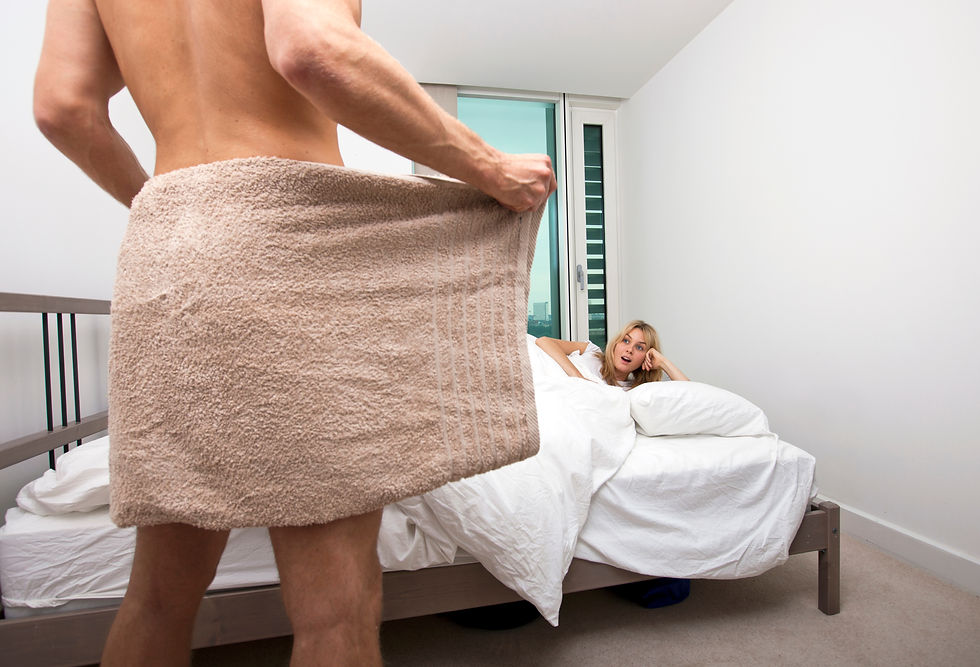
1. Stop Apologizing With Your Body
This is the highest-leverage item on the list and it costs nothing.
Most people, undressed in front of a partner, are performing a subtle apology. Arms crossing. Turning slightly away. Reaching for a blanket. Adjusting the lighting downward. Sucking in. Angling to hide the part they've decided is the problem.
Your partner registers every bit of it. And here's the thing — what they register isn't she's insecure about her stomach. What they register is withdrawal. You've communicated that you're not fully available, which is the opposite of the thing they wanted when they got you undressed.
The change is behavioral rather than emotional. You don't have to feel confident. You have to stop performing the apology. Arms down. Face forward. Hold eye contact instead of looking away. Let yourself be looked at.
This feels enormously exposed the first few times. It also immediately changes what your partner is receiving.
2. Get Good at Being Looked At
Related but distinct: the capacity to be observed without flinching is trainable.
Most people have very little practice at sustained, deliberate visibility. We're seen constantly and looked at rarely, and the difference matters. Being genuinely looked at — held in someone's attention with nowhere to hide — activates something most people have never built tolerance for.
Practical version: let your partner look at you. Deliberately. Without immediately moving, joking, or redirecting. Thirty seconds of standing there and being seen. As I wrote in the eye gazing post, the instinct to break contact arrives fast, and staying through it is the whole practice.
The boudoir photography post covers a more structured version of this. Many people report that the experience of being photographed beautifully — by someone skilled, with genuine care — permanently shifted how they see their own body. The gap between the internal verdict and the photographic evidence does something argument can't.
3. Train
I'm not going to pretend this doesn't matter.
Strength training in particular changes how a body looks undressed more than almost any other intervention, and it does it by adding rather than subtracting — which is a healthier psychological frame than the restriction approach. Posture improves. Muscle definition improves. The way you carry yourself changes, which loops back to point one.
There's also a secondary effect that gets underrated: training changes your relationship to your body from adversarial to collaborative. A body you're actively developing feels different to occupy than a body you're monitoring for flaws. As I've written about the sexual wellness workouts — cardiovascular fitness, pelvic floor work, and general strength all serve intimate life directly, not just aesthetically.
Six weeks of consistent strength work produces a visible difference. It produces a psychological difference faster than that.
4. Control the Lighting
Genuinely practical and widely underused.
Overhead lighting is unflattering to essentially everyone — it casts shadows downward, emphasizes texture, and produces exactly the clinical quality nobody wants. Most bedrooms are lit this way by default.
The fix is simple. Lower, warmer, side-angled light. Candles, a lamp with a warm bulb, string lights, a salt lamp. As I covered in the erotic environment post, this is the highest-leverage environmental variable available, and it takes about four minutes to change.
This isn't about hiding. It's about not sabotaging yourself with grocery-store fluorescents. Warm, low, uneven light makes skin look genuinely better — and just as importantly, it lowers the ambient sense of exposure that makes people self-conscious in the first place.
5. Handle the Details You Can Control
The specific things that are quick, cheap, and make a real difference:
Grooming. As I wrote in the pubic hair post, survey data consistently shows most partners prefer some degree of grooming over none. Twenty minutes with a body groomer changes the aesthetic presentation meaningfully.
Skin. Moisturized skin looks and feels better. This is unglamorous and it works. Particularly relevant for anyone who trains, showers frequently, or lives somewhere dry.
Nails and feet. Small, noticed, easy.
Posture. Free, immediate, and produces a larger visual change than most people expect. Shoulders back, chest open, spine long.
These are not the important items on this list. They're the ones you can do this week.
6. Do the Shame Work
The deepest item, and the one that makes everything else stick.
If you carry genuine body shame — and most people do to some degree — the tactical items above will help around the edges while the underlying verdict keeps running. You can be in the best shape of your life and still flinch when the lights come on, because the shame was never about the body.
For me, growing up the way I did, the body shame and the sexual shame were the same architecture. What actually moved it was somatic work — the breathwork, the body awareness practice, the externalizing exercise I wrote about for quieting the commentary. Not affirmations. Not deciding to feel differently. Body-based practice, daily, over months.
As I wrote in the letter-to-your-penis post, the relationship you have with your own body is the foundation of how you show up in intimate contexts. That relationship is buildable, and it changes how you look to another person more than any amount of training does.
The Thing Worth Knowing
Before you spend another year on this, some genuine data.
As I covered in the girth research post, 85% of women in large surveys report satisfaction with their partner's body. The research on what actually predicts sexual satisfaction points overwhelmingly toward presence, attunement, and communication — not appearance.
The part of your body you're most self-conscious about is almost certainly not what your partner is looking at. This is not reassurance. It's the finding.
What your partner actually wants is to see you genuinely available — present, uninhibited, not managing an image. They are not evaluating you against a standard. They're hoping you'll stop evaluating yourself long enough to be there with them.
That's what looking good naked actually is.
Train if you want to. Fix the lighting. Groom. Do the easy things — they help.
And then put your arms down and let yourself be looked at. That's the one that changes everything.
Ready to go deeper?
If this resonates, there are two ways to take the next step with Coelle.
Download the Coelle app — Guided audio intimacy sessions designed for couples who are ready to stop performing and start arriving. Presence is the variable, and this builds it. Download Coelle here.
Work with me directly — I offer one-on-one sex and intimacy coaching for individuals and couples, drawing on my background in sport psychology and years of personal somatic work. Body image and confidence work is a regular part of what I do with clients. Book a free discovery call here.