Shaved, Trimmed, or Natural: A Man's Guide to Pubic Hair Grooming (Including What Women Actually Prefer)
- Scott Schwertly

- Jun 26
- 5 min read
This is the kind of topic that doesn't get addressed honestly in most men's health or intimacy content — either it gets treated with jokey irreverence that skips the useful information, or it gets a clinical paragraph buried in a broader grooming article. Neither serves men who are genuinely curious about what their options are, what the practical considerations involve, and yes — what their partners tend to prefer.
I'll give it a direct treatment.
The Landscape Has Changed
Twenty years ago, the default for men was what it had always been: essentially no grooming below the belt, full stop. That has shifted meaningfully, particularly among younger generations, and the shift reflects both changing aesthetic norms and the genuine practical benefits that some level of grooming provides.
A 2017 study published in JAMA Dermatology surveyed over 3,500 men and found that 50% reported grooming their pubic hair — with trimming being by far the most common approach. The "nothing" default is no longer the majority position, and the stigma that once attached to male grooming below the waist has largely dissolved among men under 50.
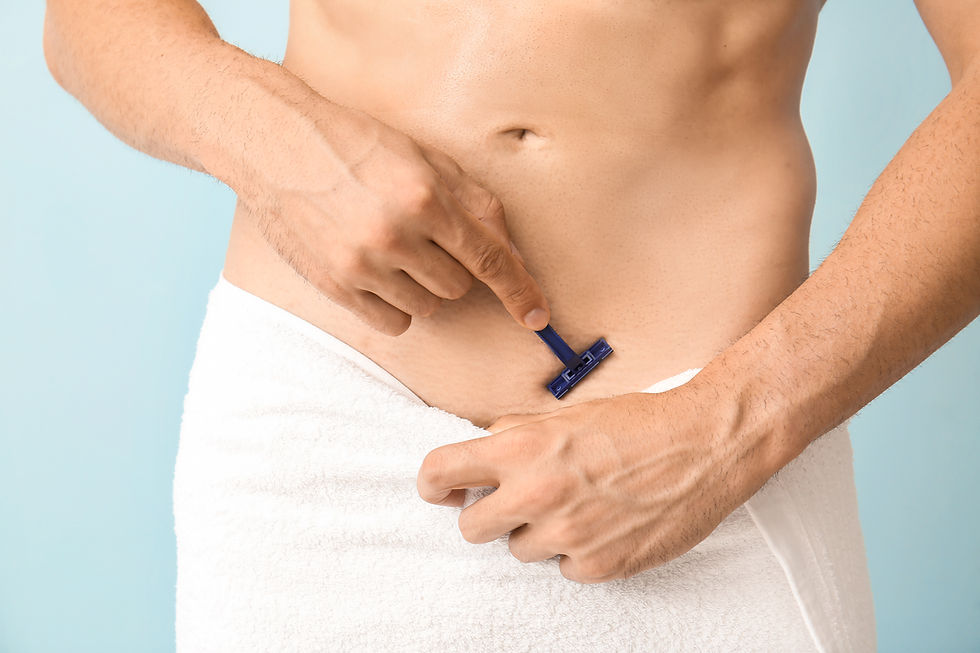
The Three Main Options
Natural / Ungroomed
No active management of pubic hair. Some men prefer this for reasons of personal comfort, low maintenance, or simply not having thought about it as a variable. There are no inherent problems with this choice — pubic hair serves a genuine biological function (reducing friction during physical activity and sex) and its presence communicates nothing about hygiene or care when the area is kept clean.
The honest practical note: a fully ungroomed pubic area can trap odor more readily than a trimmed one, simply because hair holds moisture and bacteria more effectively than skin. Regular washing addresses this fully — but it's worth naming as a practical consideration.
Trimmed
The most common grooming approach, for good reason. Trimming reduces length significantly without requiring the maintenance, skin sensitivity, or regrowth issues that come with shaving or waxing. A dedicated body groomer — the Manscaped Lawn Mower series, the Philips Bodygroom, or similar tools — makes this fast, safe, and surprisingly easy. Most men who groom trim to roughly a quarter to half inch in length, which dramatically reduces bulk and associated issues without creating stubble.
The practical advantages are real: reduced heat and moisture retention, reduced odor potential, and the aesthetic presentation that most partners surveyed prefer. Trimming also makes penis and testicle size appear more prominent — a purely aesthetic consideration that matters to some men.
Shaved / Bare
Complete removal through shaving, waxing, or laser hair removal. Produces the cleanest aesthetic and maximum reduction in heat and odor. Also carries the most practical challenges: shaving the pubic region and scrotum requires care and the right tools to avoid cuts and irritation; regrowth produces stubble that many partners find less comfortable during oral sex or close contact; and the initial learning curve involves some risk of skin irritation.
Men who shave completely often do so for specific reasons — personal preference, partner preference, or the particular aesthetic of certain types of erotic photography or content. Laser hair removal is the only permanent solution and has become increasingly accessible and affordable.
What Women Actually Prefer
Survey data on this question is fairly consistent and worth knowing, because many men groom (or don't) based on guesses about partner preference that may not be accurate.
A 2016 survey published in the Journal of Sexual Medicine found that the majority of women preferred some degree of male pubic grooming over complete naturalness — with trimmed being the most preferred option across age groups. Complete removal was preferred by a smaller subset. The data suggests that "natural" is the least preferred option among women surveyed, and "trimmed" is the most broadly preferred.
The practical caveat: individual preferences vary significantly, and actual partner preference matters more than survey averages. The most useful thing is asking — directly, without fanfare — rather than assuming. A brief "I've been thinking about how I groom down there, what do you prefer?" is more reliable than any survey result.
A separate practical consideration: long pubic hair during oral sex creates an unavoidable logistics challenge for the giving partner. This is one of the most consistent pieces of feedback in the direction of at least some trimming — not for aesthetic reasons but for the purely practical experience of the person performing oral sex.
The Testicles Deserve Specific Mention
The scrotal area is where most men stop if they do any grooming at all, and it's also where most grooming injuries occur. A few specific notes:
Use the right tool. A facial razor or standard body razor on scrotal skin is risky — the skin is thin, elastic, and moves in ways that significantly increase the chance of cuts. A dedicated body groomer with a safety guard is the appropriate tool. Electric trimmers with ceramic blades designed for sensitive areas (again, the Manscaped category) are specifically engineered to minimize this risk.
Pull skin taut. When shaving or trimming the scrotal area, gently pulling the skin taut reduces the folds and creases that are the primary source of nicks. Move slowly and in good lighting.
After-care matters. Whether trimming or shaving, an unscented moisturizer or a product specifically designed for post-grooming care in sensitive areas (Manscaped's Ball Deodorant, or similar) reduces irritation and helps maintain skin health. This is particularly relevant if you're shaving bare, where the skin will be more exposed than it's accustomed to.
The Practical Grooming Toolkit
For men starting a grooming routine in this area, a minimal effective setup:
A dedicated body groomer (not a face trimmer or leg shaver) with an adjustable guard length. The Manscaped Lawn Mower 4.0 and the Philips Norelco Bodygroom are both well-regarded and reasonably priced. Rechargeable, waterproof, and designed specifically for this use case.
A length guard setting between 3mm and 6mm for standard trimming — this produces a clean, manageable result without the regrowth irritation of going shorter.
Good lighting and a mirror for the scrotal area. This is not optional.
An unscented, gentle moisturizer for after-care.
The Conversation Worth Having
If you're in a relationship and haven't discussed grooming preferences with your partner, it's worth having. Not as a negotiation or a performance requirement — simply as part of the broader ongoing conversation about what both of you prefer and enjoy in your intimate life together.
The conversation is simpler than it sounds. "Have you ever thought about what you'd prefer in terms of how I groom down there?" takes about ten seconds to ask and produces information that might be useful. As with most things in intimate life, asking directly produces better results than guessing.
And if your partner expresses a preference you hadn't considered, treating it as useful information rather than a critique is the right frame. It's not a verdict on your current approach. It's a preference, offered because you asked, that you can decide whether to act on. That's all.
Ready to go deeper?
If this resonates, there are two ways to take the next step with Coelle.
Download the Coelle app — Guided audio intimacy sessions designed for couples who are ready to stop performing and start arriving. Download Coelle here.
Work with me directly — I offer one-on-one sex and intimacy coaching for individuals and couples, drawing on my background in sport psychology and years of personal somatic work. Learn more about coaching here.


